
Particle and accelerator concepts are visually dramatic but often difficult to communicate. Static diagrams flatten time, interaction, scale, and behavior. Dense technical explanation can be accurate while remaining emotionally and spatially inaccessible.
The communication problem
The project began with a simple question: can a complex physical idea become an explorable visual system rather than a sequence of static illustrations? The goal was not decorative motion. It was to create an interface where parameters, trajectories, energy, structure, and visual hierarchy could be experienced together.
The constraints
Real-time performance
The experience must remain responsive enough for web, presentation, or installation contexts.
Technical restraint
Visual impact must not be confused with scientific validation; calibrated educational use requires subject-matter review.
Interaction
Users need meaningful controls over parameters, pacing, viewpoints, and visual emphasis.
Adaptability
The architecture should support branded, educational, exhibit, and event variants rather than one fixed scene.
The system
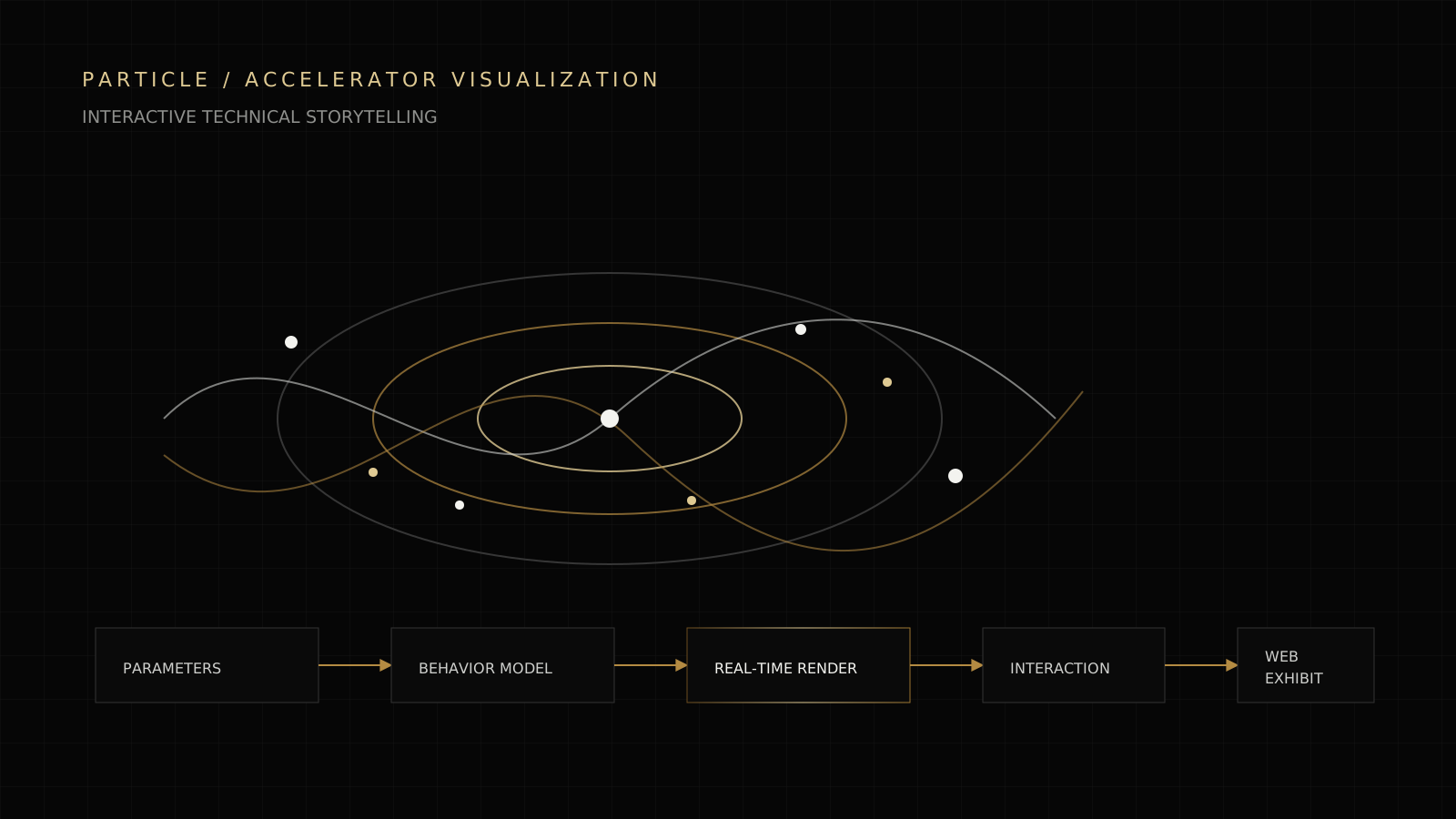
A parameter layer feeds behavior and motion models, which drive real-time WebGL or canvas rendering. Interaction controls expose selected variables, while scene design, color, timing, and typography translate the technical structure into an intelligible experience. The system can be configured for browser delivery, large-format display, guided presentation, or custom installation.
The work sits between simulation, interface design, and cinematic technical storytelling.
Accuracy and interpretation
The current studio system is an explanatory and experiential visualization platform. It should not be presented as a validated physics simulator unless its models, units, and behavior are reviewed and calibrated with appropriate subject-matter experts for that use.
Relevant applications
Museums and science centers
Interactive exhibit layers that help visitors explore otherwise abstract concepts.
University outreach
Visual communication for public programs, recruitment, donor events, or explanatory media.
Technical conferences
Large-format or web-based experiences that make specialized work legible and memorable.
Educational publishing
Adaptable interactive figures and visual systems that extend beyond static illustration.
What the project demonstrates
The visualization demonstrates Trident’s ability to merge scientific curiosity, generative code, real-time rendering, interaction design, visual development, and institutional presentation into one coherent system.
Status: active studio platform available for selected adaptation, licensing, and commissioned development.