
Valuable digital material rarely disappears cleanly. It becomes buried under years of copied folders, retired computers, inconsistent filenames, application databases, archive containers, backups, and storage media no one has time to inspect manually.
The problem
Conventional search assumes the user knows what the file is called, where it lives, and whether the operating system can index it. Legacy collections violate all three assumptions. Important material may be embedded in archives, databases, application stores, obscure directory trees, or files whose names reveal nothing.
Treasure Hunter was designed to inventory large owner-authorized storage collections and surface candidates that deserve human attention.
The constraints
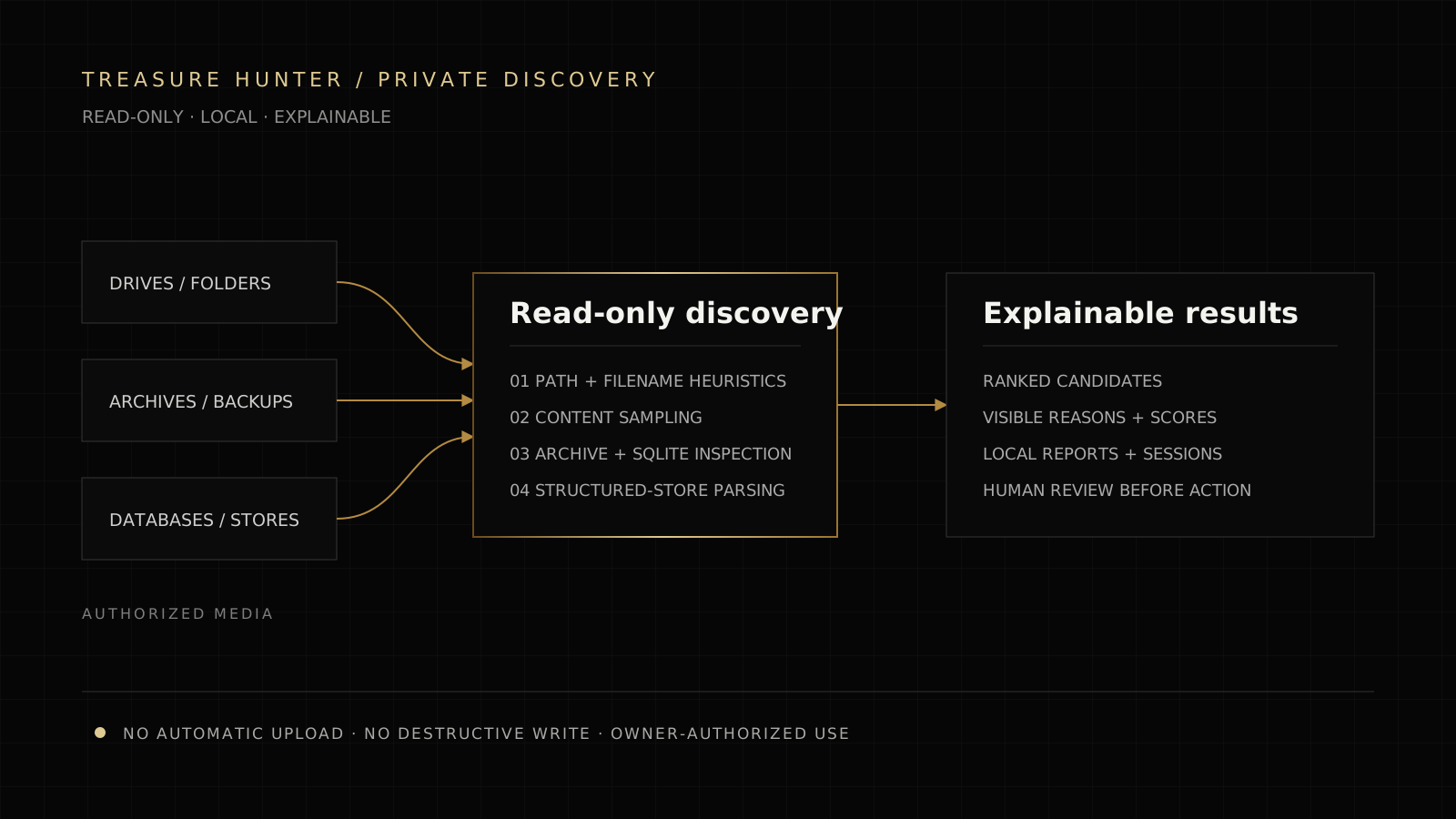
Read-only operation
The discovery process should not modify source media or make automatic recovery decisions.
Local processing
Sensitive material should not be indiscriminately uploaded to a third-party service.
Explainable findings
Every candidate should carry visible reasons and signals rather than an opaque “AI says so” verdict.
Broad formats
The system must inspect ordinary files, archives, SQLite databases, and structured application stores without treating every anomaly as treasure.
The system
The application combines multiple discovery layers: path and filename heuristics, selective content sampling, archive enumeration, read-only SQLite inspection, binary-string analysis, structured-store parsers, and category-specific scoring. Findings are ranked with visible reasons and can be saved, filtered, merged, and reviewed without changing the source.
Treasure Hunter does not promise that every unusual file has value. It creates a disciplined way to decide what deserves a closer look.
Privacy and use boundary
The intended use is local, owner-authorized discovery. The system is not positioned as credential-cracking software, legal e-discovery, destructive recovery, or a substitute for a professional damaged-media laboratory. Human review remains the final authority.
Relevant applications
Family and estate archives
Inventory decades of digital material before migration, disposition, or deeper archival work.
Collectors and researchers
Surface overlooked images, documents, databases, correspondence, and project material across complex storage.
Legacy business repositories
Identify records, creative assets, source material, and institutional memory stranded on older systems.
Recovery preparation
Create an evidence map before engaging specialists or committing to expensive manual inspection.
What the project demonstrates
Treasure Hunter demonstrates Trident’s ability to design around ambiguity: combining conventional heuristics, structured parsing, privacy constraints, explainable scoring, and a usable interface for a problem with no single clean data source.
Status: active internal development with public-release preparation and private demonstrations available.